

How to Choose Paint Colours for Your Calgary Home: Swatches, Sheen and Undertones
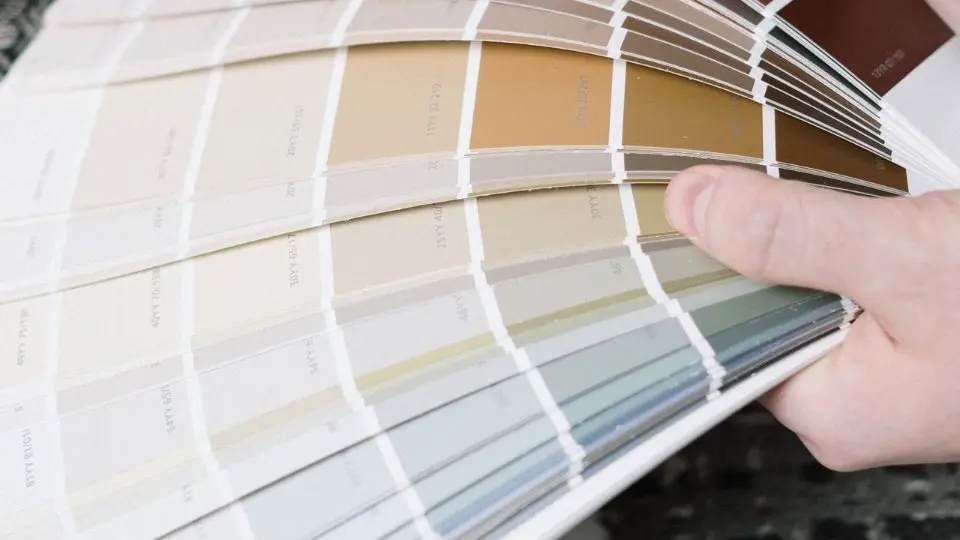
To choose the right paint colour for your Calgary home, narrow your options to two or three colours, compare their undertones side by side, then test large painted samples on several walls in daylight and lamplight for a few days. Match the sheen to how hard each room works, and plan to dispose of leftovers safely.
A colour that looks perfect on a tiny chip can look completely different on your walls. These tips will help you choose with confidence.
Why does paint look different at home than it did in the store?
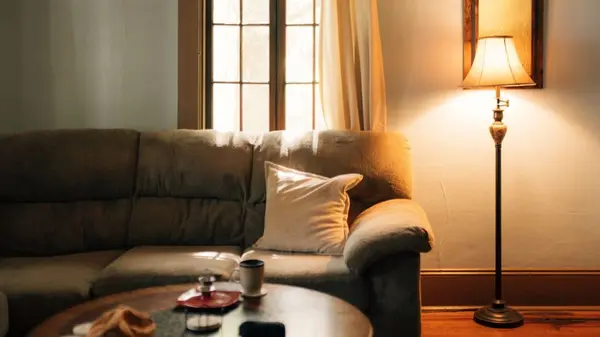
Paint looks different at home because the light in your rooms is different from the light in the store. Sherwin-Williams calls natural light a commonly overlooked factor that changes how a colour looks throughout the day, in its guide to choosing colour by room orientation. Your light bulbs matter too: in its guide to paint undertones, Sherwin-Williams explains that soft white bulbs give off warm, yellow light, while bright white bulbs give off cooler white and blue tones. In a Calgary winter, when many rooms are used mostly after dark, judge colours under your own lamps as well as in daylight.
How do you test paint colour samples properly?
Test paint colours by brushing out large samples, at least two coats thick, and viewing them throughout the day. Benjamin Moore’s guide to using paint samples recommends these steps:
- Brush out at least two coats to get the most accurate colour.
- Paint directly on the wall if your current wall is white or a light neutral, so the old colour doesn’t compete with the new one.
- Use a white foam core board if you want to move a sample around the room and see it in different lighting.
Benjamin Moore’s 236 ml sample pots cover about a 0.6 m by 0.6 m area with two coats. Sample paint is for testing colour only, so paint over your test patches with your final product.
How can you tell what undertone a paint colour has?
The easiest way to see a colour’s undertone is to compare it with other colours rather than looking at it on its own. Sherwin-Williams’ Director of Color Marketing, Sue Wadden, suggests placing a white beside a pure white so a green, pink or blue undertone shows up, and looking at the mid-to-darker colours on a colour strip, where undertones are easier to spot.
As a general guide, warm colours have orange, yellow or red undertones and feel cozy or energetic, while cool colours have blue, green or purple undertones and feel fresh and soothing. Benjamin Moore’s guide to white paint adds that red, yellow and neutral accessories suit warmer whites, while green, blue and cool grey furnishings suit cooler whites.
Which paint colours work best for north-, south-, east- and west-facing rooms?
The best colour depends on the direction your largest windows face. According to Sherwin-Williams’ room orientation guide:
- North-facing rooms get the least light, and that light is cool, so choose warm neutrals or colours with warm undertones and look for a higher light reflectance value (LRV).
- South-facing rooms get warm light, so most colours work, though very warm colours can feel too bold.
- East- and west-facing rooms shift between warm and cool light, so choose for when you use the room most.
LRV measures how much light a colour reflects, on a scale from 0 (no light) to 100 (all light).
Which paint sheen should you use in each room?
Use lower sheens on walls in quieter rooms and higher sheens where you need durability and easy cleaning. Benjamin Moore’s guide to choosing a paint finish suggests:
- Flat: ceilings and low-traffic walls; it hides flaws well but stains are harder to remove.
- Matte or eggshell: living rooms, dining rooms, bedrooms and, for eggshell, high-traffic walls such as hallways.
- Pearl or satin: high-traffic walls, trim, doors and cabinets.
- Semi-gloss and high gloss: trim, doors and cabinets; gloss highlights blemishes, so use it only on smooth surfaces.
What should you check before painting an older home?
If your home is older, check for lead-based paint before you sand, scrape or strip anything. Health Canada’s lead-based paint page says a home built before 1960 probably contains lead-based paint, and a home built between 1960 and 1990 may have it on the exterior. You can send paint chips to a lab for testing. Health Canada advises against sanders and heat guns on lead-based paint, and says painting over it can be acceptable if the underlying paint isn’t disturbed.
How do you paint safely indoors during winter?
Choose low-VOC products and keep fresh air moving while you paint. Health Canada’s DIY and renovation safety guidance suggests “low VOC” products, since VOCs can cause headaches and eye, nose and throat irritation, and recommends opening windows or using exhaust fans during and after projects. On cold Calgary days, running your bathroom or kitchen exhaust fan can help when a wide-open window isn’t practical.
Where can you take leftover paint in Calgary?
Calgarians can drop off leftover paint and paint cans for free at City household hazardous waste locations. The City of Calgary’s Household Hazardous Waste program has 11 locations, including eight fire station depots open daily from 8 a.m. to 6 p.m. Its paint disposal page says you can bring up to 20 litres per visit and should never pour paint down a drain. Province-wide, the Alberta Recycling Management Authority reports that Albertans have recycled 41.74 million litres of paint since its Paint Recycling Program started in 2008.
Key takeaways
- Narrow your choices to two or three colours, then test large samples with at least two coats.
- Compare colours side by side to reveal undertones.
- Use warm undertones and higher LRV colours in north-facing rooms.
- Match sheen to traffic: matte for quiet rooms, eggshell or satin for busy walls, semi-gloss for trim.
- Test for lead before sanding in a pre-1960 home, and ventilate well.
- Take leftover paint to a free City of Calgary household hazardous waste drop-off.
Frequently asked questions
How many coats should a paint sample have?
At least two. Benjamin Moore recommends at least two coats for the most accurate colour, either on a white or light wall or on a white foam core board.
What paint colour is best for a north-facing room?
Warm neutrals or colours with warm undertones. Sherwin-Williams says north-facing rooms get the least light, and that light is cool, so warm undertones and higher-LRV colours help balance it.
What paint finish is best for walls?
Benjamin Moore suggests matte or eggshell for living rooms and bedrooms, eggshell or satin for high-traffic walls, and flat for ceilings.
Is it safe to paint over old lead-based paint?
Health Canada says painting over lead-based paint can be acceptable if the underlying paint is not disturbed. Do not sand, scrape or burn it off.
How do I get rid of leftover paint in Calgary?
Take it to a free City of Calgary household hazardous waste drop-off at a designated fire station or Eco Centre, up to 20 litres per visit.
Refreshing a room before you sell, or picking colours for a new home? Mark & Natalie Neustaedter with LPT Realty Calgary are always happy to share what we see buyers responding to in Calgary homes. Learn more at markandnatalie.com.
Sources
- Sherwin-Williams, “Choosing Color Based on Room Orientation”
- Sherwin-Williams, “What’s in a Color? Understanding Paint Undertones”
- Benjamin Moore, “Use Sample Paint Colours”
- Benjamin Moore, “The Ultimate Guide to White & Off-White Paint Colors”
- Benjamin Moore, “How to Choose a Paint Finish”
- Health Canada, “Lead-based paint”
- Health Canada, “Chemical safety for renovations and do-it-yourself (DIY) projects”
- City of Calgary, “Household Hazardous Waste (HHW) Program”
- City of Calgary, “How to safely dispose of paint and paint cans”
- Alberta Recycling Management Authority, “Paint Recycling Program”
Categories
Recent Posts








"My job is to find and attract mastery-based agents to the office, protect the culture, and make sure everyone is happy! "