
Winter Home Maintenance Checklist for Calgary Homeowners: Furnace, Pipes, Alarms and Snow
To get a Calgary home ready for winter, change the furnace filter, book a yearly furnace service, drain outdoor taps, find your main water shut-off, test smoke and carbon monoxide alarms, keep vents and your gas meter clear of snow, watch for ice dams, and clear your sidewalk within 24 hours of a snowfall ending.
How often should you change your furnace filter in winter?
Check your furnace filter monthly in the heating season and change it at least every three months. Natural Resources Canada’s winter heating tips say a clean filter improves airflow, and if it has been more than three months, it’s time to change it. The Insurance Bureau of Canada’s winter safety checklist recommends cleaning or replacing filters monthly in the heating season.
The Calgary Fire Department’s carbon monoxide guidance also recommends a yearly professional inspection of fuel-burning appliances, chimneys and vents.
How do you prevent frozen and burst pipes in Calgary?
Keep the heat on, drain outdoor lines and insulate pipes in cold spots. The City of Calgary’s frozen water lines page recommends:
- Keeping your thermostat at 15°C or higher.
- Turning off, disconnecting and draining the water lines to outside faucets and garden hoses.
- Insulating pipes in cold areas such as basements, crawl spaces and garages.
- Opening interior doors and cabinets so warm air reaches pipes.
Know where your main water shut-off valve is before you need it. The City says it is often near the water meter where the water line enters your home, usually in the basement. If a pipe bursts and your home floods, turn that valve off.
What should you do if your home will be empty this winter?
If you’ll be away, keep the heat on and have someone you trust check the home as often as your insurance policy requires. The Insurance Bureau of Canada’s guide to extreme cold coverage says standard policies cover burst-pipe damage when pipes are in the heated part of the home and reasonable steps are taken to maintain heat. For a vacant home, IBC says to shut off the water and drain the lines, noting most policies exclude frozen pipe damage in vacant homes.
How do you prevent ice dams on your roof and eavestroughs?
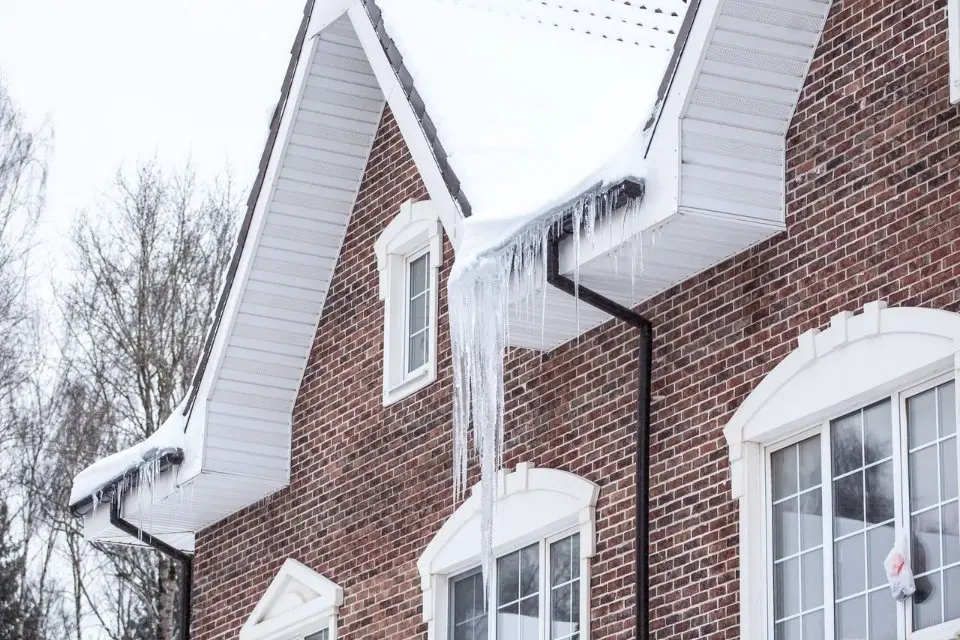
Prevent ice dams by keeping heat out of your attic and keeping your eavestroughs clear. IBC’s ice dam explainer says they form when melting snow runs down the roof and refreezes in cold eaves or eavestroughs. The main causes are inadequate attic insulation, poor attic ventilation, and heavy snow with blocked eavestroughs.
IBC suggests clearing eavestroughs, checking insulation and ventilation, using a roof rake and installing heat cables. Trapped water can get under shingles and damage ceilings and walls, so call a professional if you spot an ice dam.
Where should smoke and carbon monoxide alarms go, and how often should you test them?
Install smoke and carbon monoxide (CO) alarms on every level of your home, including the basement, and test them once a month. The Calgary Fire Department’s smoke alarm page says to put one inside every bedroom or outside every sleeping area and to replace smoke alarms after ten years. The most important spot for a CO alarm is in or near bedrooms, and CO alarms typically expire after 5 to 10 years.
Health Canada recommends at least one CO alarm with battery backup in any home with combustion appliances. If it sounds, leave immediately and call 911 from outside.
Why should you keep furnace and dryer vents clear of snow?
Blocked exhaust vents can let carbon monoxide build up inside your home. Health Canada recommends checking dryer, furnace, fireplace and other exhaust vents during and after snowstorms, and IBC says to keep snow away from gas meters and basement windows too. For natural gas emergencies, ATCO’s natural gas emergency line is 1-800-511-3447.
What does heavy window condensation mean in winter?
Heavy, persistent moisture is worth investigating. The Calgary Fire Department lists a lot of moisture on windows and walls, along with stale air or soot around appliances, as possible signs of carbon monoxide. (See our November 17 post for indoor humidity targets.)
When do you have to clear your sidewalk in Calgary?
Calgary property owners must clear public sidewalks next to their property down to bare pavement within 24 hours of a snowfall ending. According to the City of Calgary’s snow and ice bylaw page, you must also clear at least 1.5 metres of an adjacent public pathway. Occupants who don’t comply can be fined $250 for a first offence, $500 for a second and $750 for a third. The City can also clear it and invoice the owner a minimum of $150 plus GST and fees.
How do you use salt and ice melt without damaging concrete?
Avoid salt on concrete where you can and use traction sand instead. Concrete Alberta’s de-icing salts guide warns that salts, calcium chloride and de-icing chemicals can speed up freeze-thaw damage that causes flaking, especially on concrete less than a year old. It recommends traction sand and a penetrating sealer.
For public sidewalks beside your home, the City offers a free sand-salt mix called pickle at fire stations and Road Maintenance District locations. Bring a shovel and a container under 25 kg.
Key takeaways
- Check the furnace filter monthly, change it at least every three months, and book a yearly professional inspection.
- Keep the thermostat at 15°C or higher, drain outdoor taps and know where your main shut-off is.
- When away, have the home checked as often as your insurer requires.
- Clear eavestroughs and watch for ice dams.
- Test smoke and CO alarms monthly; replace smoke alarms after ten years.
- Keep vents and your gas meter clear of snow after every storm.
- Clear your sidewalk within 24 hours of a snowfall ending, and use traction sand on newer concrete.
Frequently asked questions
How often should I change my furnace filter in winter?
Check it monthly. Natural Resources Canada says change it if it has been more than three months, and the Insurance Bureau of Canada recommends cleaning or replacing it monthly in the heating season.
What temperature should I keep my house at to prevent frozen pipes?
The City of Calgary recommends keeping your thermostat at 15°C or higher, even when you are away.
How soon do I have to shovel my sidewalk in Calgary?
Within 24 hours of a snowfall ending. Calgary’s Street Bylaw requires clearing adjacent public sidewalks to the bare surface; first-offence fines are $250.
Where should carbon monoxide alarms be installed?
The Calgary Fire Department recommends at least one CO alarm on every level of your home, including the basement, with the most important location in or near bedrooms. Test them monthly.
What causes ice dams on a roof?
Ice dams form when snow melts, runs down the roof and refreezes at cold eaves or eavestroughs. Poor attic insulation or ventilation and blocked eavestroughs make them more likely.
Thinking about selling in the new year? Mark & Natalie Neustaedter with LPT Realty Calgary are always happy to share what we’re seeing in Calgary homes. Learn more at markandnatalie.com.
Sources
- Natural Resources Canada, “Winter is coming: Top tips to heat your home for less”
- Insurance Bureau of Canada, “Winter safety”
- Insurance Bureau of Canada, “Does my insurance cover damage caused by extreme cold?”
- Insurance Bureau of Canada, “Stay protected: Understanding and helping prevent ice dams”
- City of Calgary, “Protect your water lines and meter from freezing”
- City of Calgary (Calgary Fire Department), “Carbon monoxide alarms”
- City of Calgary (Calgary Fire Department), “Smoke alarms”
- Health Canada, “Carbon monoxide: Preventing exposure”
- ATCO, “Cold Weather Safety”
- City of Calgary, “Bylaws related to snow and ice”
- City of Calgary, “Free sand-salt mix for easier shoveling”
- Concrete Alberta, “De-icing Salts & Chemicals: Don’t Compromise Your Concrete”
Categories
Recent Posts








"My job is to find and attract mastery-based agents to the office, protect the culture, and make sure everyone is happy! "